Land
Land is a key part of our nature goal and spans both our operations and value chain. On this page we detail our land targets and how we aim to achieve them.
Our land targets
-
Positive impact on biodiversity at all GSK-owned sites by 20302
-
100% of key naturally-derived materials sustainably sourced and deforestation free by 2030
2 Using the Natural England Biodiversity Net Gain methodology
How we plan to achieve our land targets
Biodiversity at GSK sites
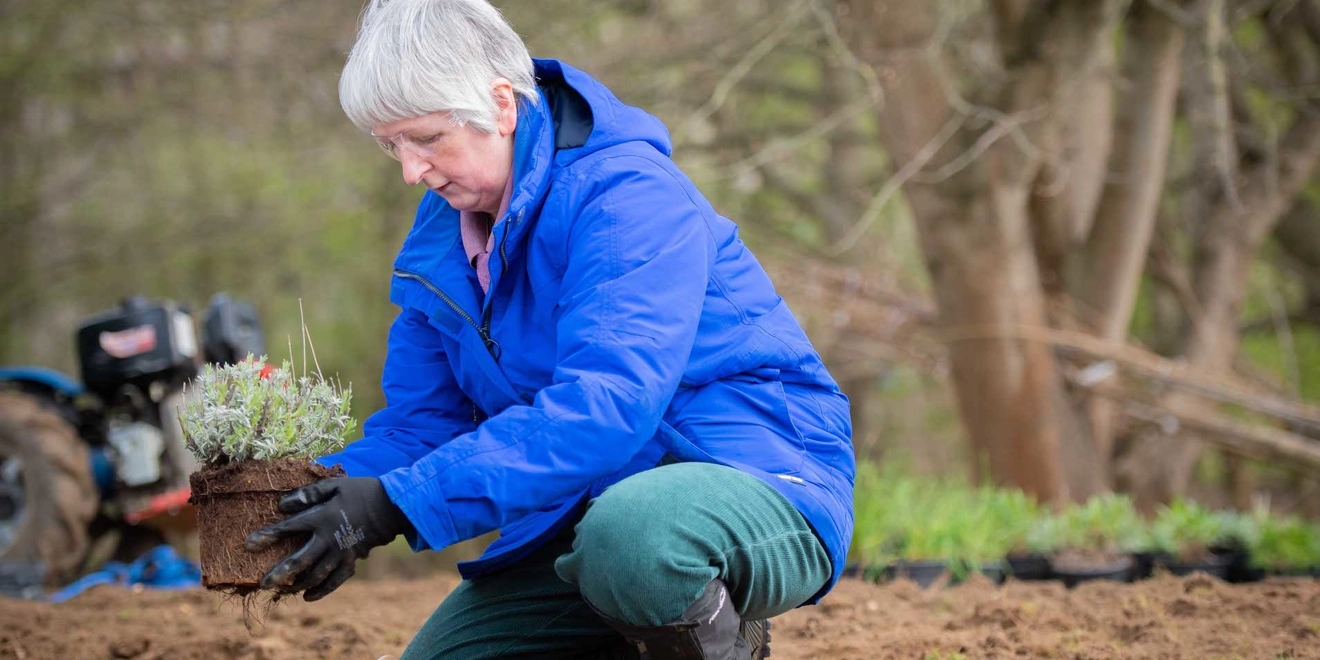
We have committed to have a positive impact on biodiversity at all GSK-owned sites by 2030 and have completed baseline biodiversity assessments using the Natural England Biodiversity Net Positive methodology and have management plans in place for all of our sites. Sites are investing in biodiversity programmes to improve habitats, protect species and improve soil or water quality. This might include tree planting, restore native fauna, adding bird boxes on-site and pond maintenance.
We’re also contributing to broader landscape restoration in the regions where our sites are located. Through Projects for Nature’s we supported the Living Rivers project in the UK, that aims to restore chalk streams in Hertfordshire, a region where three of our sites are located.
We know that making nature easily accessible improves mental and physical wellbeing. Investing in site biodiversity is also investing in health and wellbeing for our people, as well as supporting team building as people can get involved with local projects.
Sustainable and deforestation-free sourcing
Our target is that 100% of key naturally-derived materials sustainably sourced and deforestation free by 2030.
Our primary dependency on land is due to the natural materials we source, some of which derive from land-based commodities, a key driver of deforestation and land use change, globally. The supply chains for some of these commodities are often long and complex and may be many tiers removed from our direct engagement.
While we work on avoiding or reducing impact by assessing opportunities to improve efficiency, material changes or switching to alternatives, we have set ambitious standards for suppliers who provide us with materials that are highly dependent on nature, such as sugar, paper, palm oil, lactose, gelatine and soy.
These standards, developed in collaboration with third-party experts, aim to support these suppliers to assess, improve, and verify their approach to addressing a range of nature impacts – and associated climate and social impacts – including land-use, water stewardship and biodiversity.
As a first stage, we are addressing the 12 highest priority materials, including paper and palm oil.
We have engaged with associated suppliers to map the full supply chains involved, understand existing sustainability standards, identify gaps and establish action plans.
Sustainable sourcing standards
Investing in nature
We will also invest in the protection and restoration of land use across and beyond our value chain, in a way that also contributes to carbon removal and water basin restoration – further helping us to achieve our climate and water targets.
For example, GSK is a participant of the Lowering Emissions by Accelerating Forest finance (LEAF) Coalition, which supports high-quality emissions avoidance from tropical and subtropical forest countries, helping to reduce and end deforestation and protect future biodiversity.